
1 Falai Chen, 2025 SMA Fellow
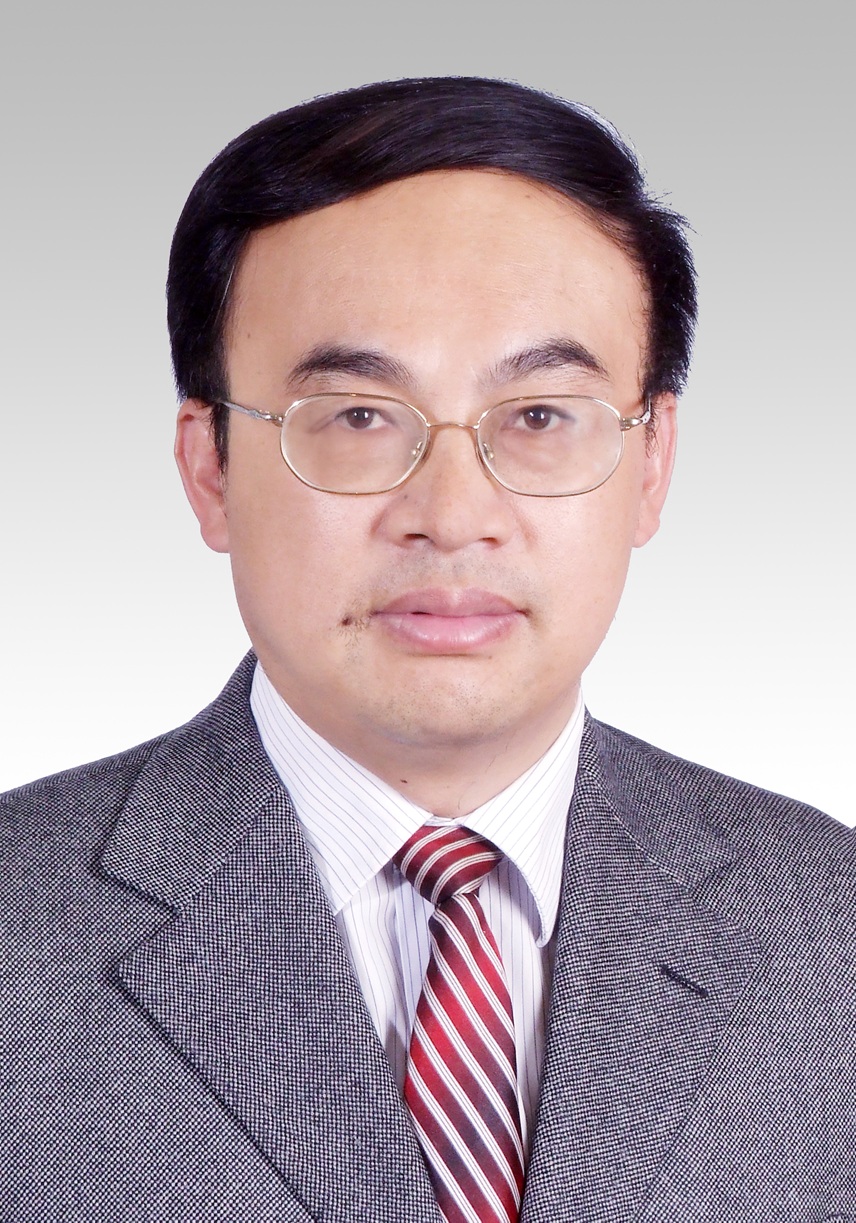
Falai Chen has made fundamental contributions to geometric modeling, particularly in surface implicitization, algebraic representations of geometric models, splines over T-meshes, and domain parametrization for isogeometric analysis.
Surface Implicitization
Falai Chen introduced, together with T. W. Sederberg, a highly effective method for implicitizing rational parametric surfaces. This work laid an important foundation for new representations of geometric models and for effective surface-surface intersection computation.
Mu-basis for Curves and Surfaces
He invented the concept of mu-basis for rational curves and surfaces. This algebraic tool builds a bridge between parametric and implicit representations, and has played an important role in problems such as representation conversion, singularity computation, and inversion.
Splines over T-meshes and Isogeometric Analysis
Falai Chen initiated important work on splines over T-meshes and introduced PHT-splines, a class of locally refinable splines with strong local refinement properties. These splines have been widely used in engineering analysis. He has also introduced methods based on quasi-conformal mapping, optimal mass transport, deep neural networks, and ADMM for domain parametrization in isogeometric analysis.
Falai Chen received the 2024 John Gregory Memorial Award for his contributions to geometric modeling. He has also served the community through journal editorships, conference program committees, and the organization of geometric modeling seminars.
2 Kai Hormann, 2025 SMA Fellow

Kai Hormann has made outstanding and fundamental contributions to geometric modeling, with major impact in generalized barycentric coordinates, subdivision algorithms, and triangle mesh parameterization.
Generalized Barycentric Coordinates
Kai Hormann developed and analyzed several important generalizations of classical barycentric coordinates from simplexes to arbitrary polygons and polyhedra. These contributions enabled new tools for image deformation, shape deformation, and advanced finite element methods.
Subdivision Algorithms
He made key contributions to the design and analysis of non-linear and geometric subdivision schemes. His work helped produce limit curves and surfaces with improved shape properties and advanced the theory and practice of subdivision in geometric modeling.
Triangle Mesh Parameterization
Kai Hormann is also widely recognized for pioneering work on low-distortion parameterization of triangle meshes and parameterization over polycube domains. These contributions have had strong and lasting impact on applications such as texture mapping, scattered data interpolation, and surface correspondence.
Kai Hormann has also contributed substantial professional service. He has served on the editorial boards of leading journals in computer graphics and geometric modeling, chaired the steering committee of GMP, and received the 2024 John Gregory Award for his lifetime impact in geometric modeling.
3 Lucia Romani, 2025 SMA Fellow
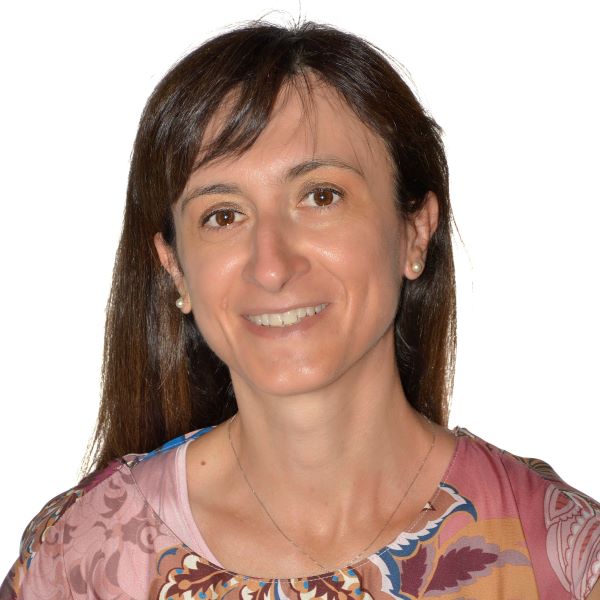
Lucia Romani has made significant contributions to geometric modeling and CAGD, especially in Pythagorean hodograph curves, subdivision schemes, and mathematically grounded modeling methods with applications in image processing.
Pythagorean Hodograph Curves
Lucia Romani is well known for her contributions to the study of Pythagorean hodograph curves, an important topic in geometric design with strong mathematical structure and broad relevance to curve design and motion-related applications.
Subdivision Schemes
She has carried out pioneering work on level-dependent subdivision schemes and related spline and refinement techniques. Her research has contributed both new theory and practical algorithms for geometric modeling.
Geometry and Image-based Modeling
In collaboration with researchers in biomedical imaging, she has also helped develop subdivision methods that can be combined with image processing algorithms for the segmentation of blob-like shapes from images.
Lucia Romani has provided remarkable service to the community. She is Co-Editor-in-Chief of Computational and Applied Mathematics, Associate Editor of Computer-Aided Design and Computer Aided Geometric Design, and has taken major leadership roles in both SIAM and SMA. Within SMA, she has served on the SPM program committee many times, including as Program Co-Chair in 2023, 2024, and 2025.
4 Charlie C.L. Wang, 2025 SMA Fellow
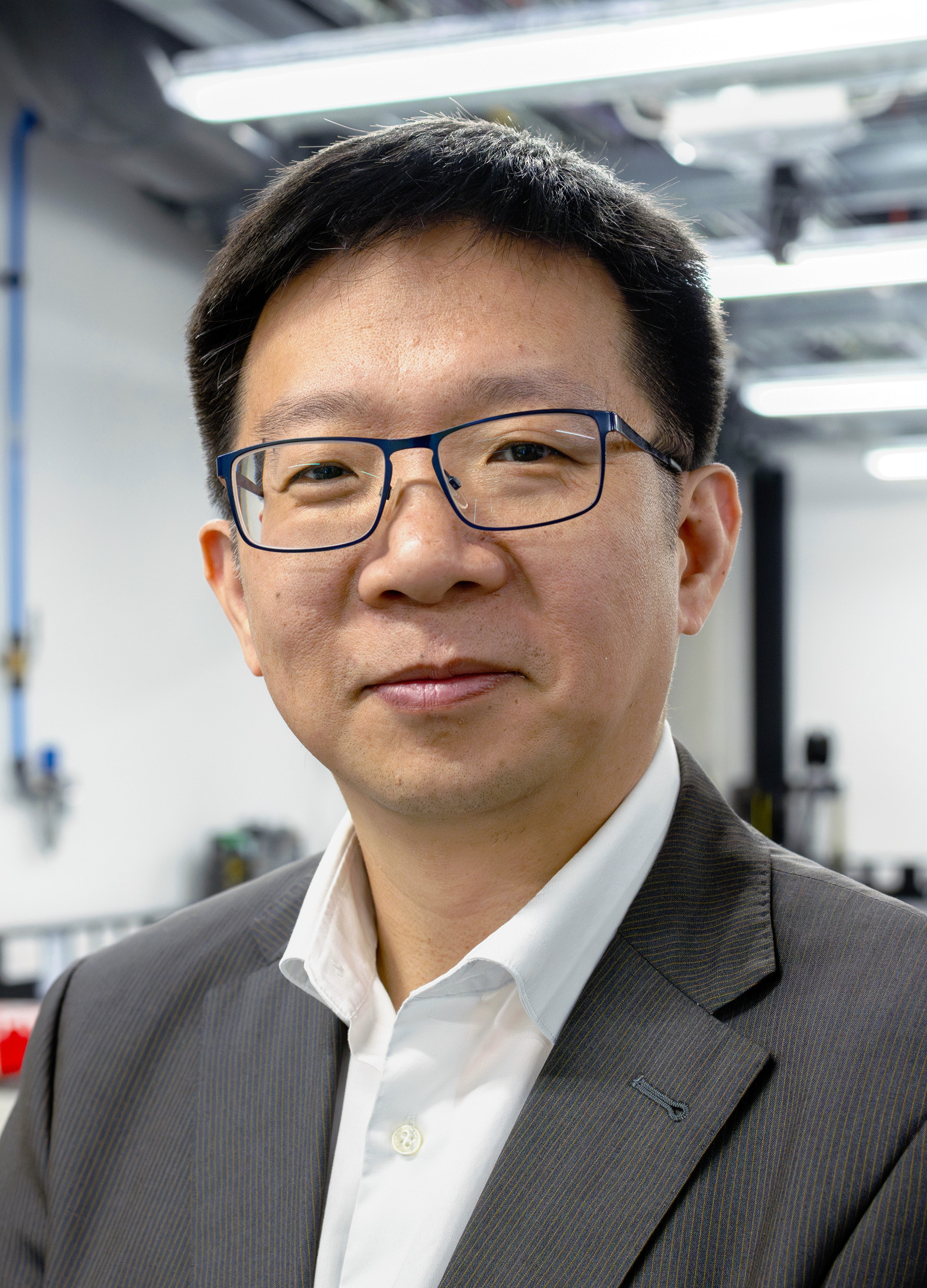
Charlie C.L. Wang has made significant contributions to the field of geometric modeling and solid modeling, especially in geometric computing for advanced manufacturing, multi-axis 3D printing, and related design and fabrication problems.
Geometric Computing for Advanced Manufacturing
Charlie Wang has developed influential methods that connect geometric modeling with manufacturing applications. His work has helped advance computational design and fabrication, especially for additive manufacturing and smart manufacturing systems.
Multi-axis 3D Printing
He has made important contributions to multi-axis 3D printing, including slicing, toolpath generation, and structure-aware fabrication. His recent work on neural slicers and general slicing frameworks has expanded the capabilities of geometric computing in modern manufacturing.
Design, Fabrication, and Robotics
His research also spans geometric methods for soft robotics, deformable design, and fabrication-aware modeling. These contributions have broadened the impact of solid modeling methods in engineering practice.
Charlie Wang has also provided strong service to the community. He served on the Executive Committee of the Solid Modeling Association, including as Chair from 2021 to 2024, and has served on the editorial boards of several leading journals in the field.