
1 Xianfeng David Gu, 2026 SMA Fellow
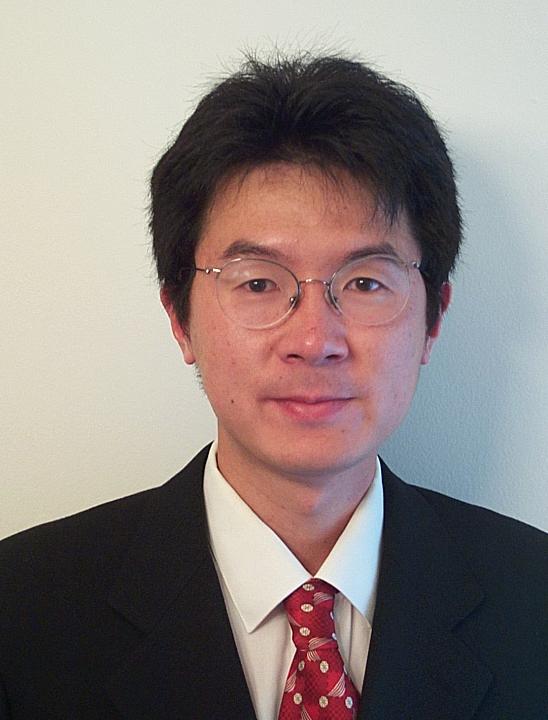
Xianfeng David Gu has made fundamental contributions to solid modeling and geometric design. His research bridges deep mathematical theories with practical algorithms, especially in computational conformal geometry, manifold splines, and structured mesh generation.
Computational Conformal Geometry
Xianfeng David Gu is a principal founder of Computational Conformal Geometry. This field extends modern geometric theory to discrete manifolds. It provides a rigorous mathematical foundation for solid modeling and geometric design. Together with his collaborators, he developed discrete Hodge decomposition, discrete surface Ricci flow, discrete Riemann–Roch theory, and geometric optimal transportation theory. These have become core tools in modern geometric modeling and processing.
Manifold Splines
He revealed the topological obstruction underlying the non-existence of singularity-free splines. He also introduced methods based on Ricci flow for constructing manifold splines.
Surface and Volumetric Meshing
He developed techniques for high-quality surface and volumetric meshing based on the surface uniformization theorem. He established a deep equivalence between quadrilateral meshes and quartic meromorphic differentials. He also applied the Abel–Jacobi theorem to generate structured meshes.
Hexahedral Mesh Generation
He introduced algorithms for computing surface and volumetric foliations via graph-valued harmonic maps. This work enables practical solutions to the long-standing challenge of hexahedral mesh generation.
Xianfeng David Gu’s work has had broad impact across solid modeling, computer-aided design, computer graphics, computer vision, medical imaging, and generative AI. Many of his innovations have been adopted in industry by companies including Siemens, Ansys, Cadence, and Google.